
Security officer jobs or security guards, whatever you want to call them, are hired to protect property, people, or assets. On paper, that means patrolling premises, monitoring entrances, checking surveillance cameras, verifying IDs, preventing theft or vandalism, and responding to incidents.
In reality, what you’re actually doing varies wildly depending on where you work. A security guard at a hospital does completely different work than a security guard at a gated apartment complex, who does completely different work than someone monitoring a corporate office building overnight.
Some security officer jobs involve genuine responsibility and occasional high-stress situations. Others involve sitting at a desk for eight hours, watching cameras where nothing ever happens. Some require physical fitness and conflict de-escalation skills. Others require the ability to stay awake while absolutely nothing occurs for your entire shift.
The common thread is that you’re the visible presence that’s supposed to deter problems and respond when they arise. You’re not a police officer—you have limited authority—but you’re expected to handle situations until actual law enforcement shows up if needed.
Requirements for security officer jobs are usually minimal: a high school diploma or GED, a background check, and maybe some basic training. Some states require licensing, especially for armed positions. But generally, security work has a low barrier to entry, which is both its appeal and part of why the pay is what it is.
Read Also: County Jobs in the USA: Everything You Need to Know
The Job Market and Demand for Security Officer Jobs
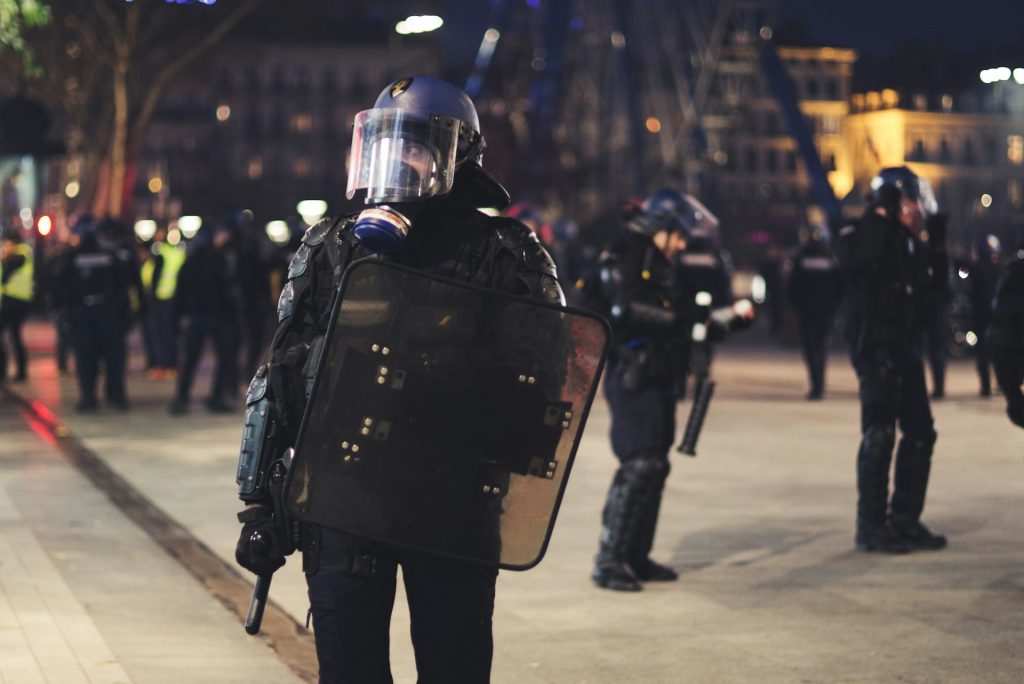 Over 1.2 million security guards work in the U.S. as of 2023. That’s a lot of people standing in lobbies, patrolling parking lots, and watching monitors.
Employment growth is projected at around 3% through 2028—modest but steady. Despite slow growth, there are constant openings because turnover is high. People cycle through security jobs frequently. Some are using it as temporary work while looking for something better. Others can’t handle the hours or the pay. Some get promoted or move to other industries.
Security jobs exist everywhere. Any business with property to protect, any facility that needs controlled access, any event venue, any residential complex—they all need security. Cities have more openings than rural areas, but security work exists in basically every U.S. market.
The accessibility for security officer jobs is real. If you need work relatively quickly and don’t have specialized skills or education, security is one of the fields where you can get hired within weeks. Background check, drug test, maybe a quick training session, and you’re working.
Read Also:Best Workers’ Compensation Lawyers in the USA: How to Find the Right One
Salary Range for Security Officer Jobs
Let’s be honest about the money in security officer jobs, because this is where a lot of people get disappointed.
The mean hourly wage across all security officer jobs is about $19.44/hour, which works out to roughly $40,440 annually if you’re working full-time. But that average hides massive variation.
Entry-level unarmed security guards
This typically starts at $15-17/hour. In some states, that’s barely above minimum wage. You’re making $31,200-$35,360 annually if you work full-time year-round. That’s not poverty wages, but it’s not comfortable either, especially in expensive cities.
Median wage
This sits around $17.82/hour ($37,070 annually). This is what you might make with a year or two of experience, maybe working for a decent company, possibly with some shift differentials included.
Higher-end security positions
armed guards, corporate security at major companies, supervisory roles, security at high-risk facilities—can pay $21-28/hour ($43,680-$58,240 annually). The 90th percentile reaches $27.60/hour, which is $57,400 annually.
But here’s what affects your actual take-home:
Shift differentials matter.
Night shifts often pay an extra $1-3/hour. Weekend and holiday shifts might include premium pay. If you’re willing to work overnight Friday through Sunday, you might make $22/hour while the daytime Monday-Friday guard makes $17/hour for the same role.
Overtime exists but isn’t guaranteed.
Some security jobs involve regular overtime—covering shifts when people call out, working extra during busy periods. Time-and-a-half can significantly boost your paycheck. But many companies actively avoid scheduling overtime to save money.
Location dramatically affects pay.
Security guards in California, New York, Washington, or Alaska make more than guards in Mississippi, Arkansas, or West Virginia. A guard in San Francisco might make $25/hour while a guard in rural Alabama makes $13/hour. But remember: the cost of living varies proportionally. $25/hour in San Francisco doesn’t go as far as $18/hour in Nashville.
Armed vs. unarmed makes a difference.
Armed security positions typically pay $3-7/hour more than unarmed positions. But they also require weapons training, licensing, liability insurance, and expose you to significantly more risk.
The company matters too.
Large national security companies (Allied Universal, G4S, Securitas) have standardized pay scales and benefits. Small local contractors might pay less but offer more flexibility. In-house security for corporations or institutions usually pays better than contract security.
Different Settings, Different Experiences
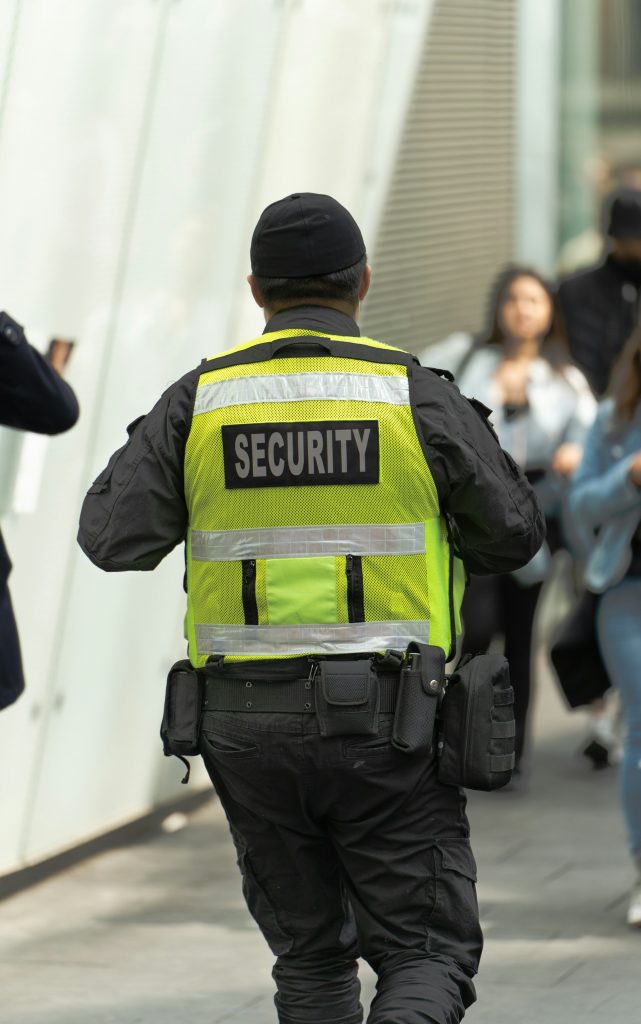 What your day actually looks like depends entirely on where you work security officer jobs.
Hospital security
This is among the most challenging. You’re dealing with psychiatric patients, intoxicated people, aggressive family members, and emotionally charged situations. You break up fights, escort disruptive visitors out, and respond to codes when patients or staff are in danger. It’s active, stressful, and requires good judgment.
Hospital security pays slightly better than average—maybe $18-22/hour—because the work is harder. You need thick skin, de-escalation skills, and the ability to stay calm when situations get chaotic. Some hospitals have armed security; most don’t.
Retail security or loss prevention
This involves watching for shoplifters, monitoring cameras, and sometimes confronting thieves. It sounds straightforward until someone gets aggressive or runs, and you have to decide whether chasing them is worth the liability risk. Retail security typically pays $15-18/hour. You’re on your feet constantly, and the work can be tedious or suddenly stressful.
Corporate or office building security
This is generally easier. You’re checking badges, signing in visitors, and patrolling empty floors overnight. It’s more boring than difficult. You might go entire shifts where nothing happens. Pay ranges from $16-20/hour depending on the company and location. Night shifts are common because someone needs to be there 24/7.
Residential security at apartment complexes or gated communities
This involves gate duty, patrolling grounds, addressing tenant complaints, and maybe dealing with noise issues or trespassers. Pay is typically $15-18/hour. The work is usually low-stress but can be monotonous. You’re a visible deterrent more than an active responder.
Event security
This is temporary work—concerts, sporting events, conferences. You’re checking tickets, managing crowds, and watching for issues. Pay varies widely ($15-25/hour, depending on the event), and work is irregular. Good for supplemental income, not stable full-time employment.
Industrial or construction site security
This often involves overnight shifts watching equipment and property. You’re preventing theft and vandalism at job sites. It’s isolated—you might be the only person on site—and extremely boring. Pay is $16-20/hour. Some people like the solitude; others find it unbearable.
Read Also: Post Office Jobs in USA- Everything You Need to Know
Armed vs. Unarmed—Understanding the Difference
This distinction matters more than people realize.
Unarmed security positions have limited authority. You observe, report, and deter by presence. If a serious situation arises, you call the police and maybe attempt verbal de-escalation. You’re not physically intervening unless necessary for self-defense. The liability is lower, the training requirements are minimal, and the pay reflects that.
Armed security positions come with guns and significantly more responsibility. You’re expected to respond to threats with force if necessary. This means weapons training, regular qualification requirements, licensing fees, and liability insurance. Some positions require you to carry your own weapon and provide your own insurance.
Armed guards typically make $3-7/hour more than unarmed guards. Sounds good until you consider the risk. If you discharge your weapon, even in justified circumstances, you’re facing investigation, potential lawsuits, possible criminal charges, and psychological aftermath. The extra $6,000-$14,000 annually might not feel worth it if you’re ever in a situation where you have to shoot someone.
Many experienced security professionals avoid armed positions specifically because the liability outweighs the modest pay increase. Unless you’re working in executive protection or high-value asset security (which pays significantly more), armed security at standard rates often isn’t worth the risk.
Read Also: FBI Jobs in the USA (The Real Requirements, Process, and Reality Check)
What the Job Actually Feels Like
 Let’s talk about what fills your actual hours in security officer jobs, because the job description doesn’t capture the reality.
Boredom is the main challenge for many security positions.
You’re standing or sitting in one place for hours. Nothing happens. You’re watching cameras where nothing occurs. You’re patrolling the same hallways repeatedly. Your biggest challenge is staying awake and alert when your brain is screaming at you that nothing matters and everything is pointless.
Some people handle this better than others. If you can zone out, listen to podcasts (when allowed), or genuinely don’t mind the monotony, it’s fine. If you need stimulation and engagement, you’ll be miserable.
Overnight shifts are brutal.
Working 11 PM to 7 AM wrecks your sleep schedule and your social life. You’re awake while everyone else sleeps, sleeping while everyone else is awake. Your circadian rhythm never fully adjusts. You feel perpetually tired. Your health suffers—weight gain, digestive issues, mood problems.
But overnight shifts often pay more and tend to be calmer. Fewer people, fewer problems, less supervision. Some security guards specifically prefer nights for these reasons, despite the toll it takes.
You’re simultaneously invisible and blamed for everything.
When things go smoothly, nobody notices you exist. When something goes wrong—even things completely outside your control—you’re the first person blamed. A package goes missing? Where was security? Someone slips on ice? Why didn’t security notice that hazard? Never mind that you’re one person covering an entire building or campus.
You have responsibility without authority.
You’re expected to handle situations, but given limited tools to do so. You can’t arrest people. You often can’t physically restrain anyone without risking assault charges. Your authority extends to asking people to leave and calling the police when they don’t. This gap between expectations and actual power creates frustrating situations.
People treat you like you’re stupid or lazy.
There’s a stigma around security work. People assume you couldn’t get a “real job.” Employees at facilities where you work sometimes treat you as beneath them, even though you’re protecting their workplace. It takes a thick skin to handle the casual disrespect.
But when something serious happens, you’re it.
Medical emergency. Fire alarm. Suspicious person. Active threat. In those moments, you’re the first responder. You’re making decisions that affect people’s safety. That responsibility is real and can be stressful, especially knowing you have limited training and authority.
Read Also: Law Enforcement Jobs in the U.S.: What You Need to Know
Common Problems in Security Officer Jobs
Unclear expectations from employers. You’re told to “maintain security” without specific protocols for various situations. Then, when you use your judgment, you’re told you should have done something different. Lack of clear procedures leaves you exposed to criticism, no matter what you do.
Liability concerns are constant. Touch someone while escorting them out, and you risk assault charges. Fail to stop a crime, and you’re negligent. You’re damned if you act and damned if you don’t. Many security guards learn to default to calling the police for anything remotely serious to protect themselves legally.
Equipment and support are often inadequate. Your radio doesn’t work in certain parts of the building. The cameras have blind spots. There’s no protocol for specific situations. Management expects you to handle problems, but doesn’t provide tools or training.
Schedule instability happens frequently. You’re expected to cover when others call out. Shifts change with little notice. Overtime is mandatory one week, completely unavailable the next. Planning your life around an unreliable schedule is exhausting.
The work is isolating. Many security positions involve working alone. No coworkers to talk to. No one is checking on you. Just you and the silence for eight to twelve hours. Some people love this. Others find it psychologically difficult.
Physical toll adds up. Standing for entire shifts destroys your feet and back. Walking patrol routes for hours wears on joints. Sitting in one position monitoring cameras causes its own problems. The job isn’t as physically demanding as construction or warehouse work, but it’s harder on your body than office work.
Read Also: Paralegal Jobs in the USA with Salaries: What Paralegals Actually Earn
How to Find Better Security Officer Jobs
Not all security positions are equally bad. Here’s how to identify opportunities worth taking:
In-house corporate security beats contract security. Companies that employ security directly (rather than contracting through security firms) generally pay better, offer actual benefits, and treat guards as part of the team rather than replaceable contractors. Banks, universities, major corporations with large campuses—these in-house positions are worth pursuing.
Government and institutional security tends to be better. Security at federal buildings, courthouses, public universities, or government facilities often includes union representation, defined pay scales, and better benefits. The hiring process is longer and more bureaucratic, but the positions are more stable.
Avoid the bottom-tier contract companies. Some security firms are known for terrible pay, no benefits, constant schedule changes, and treating guards as disposable. Research companies before accepting positions. Security guard forums and Reddit communities will tell you which companies to avoid.
Ask about training during interviews. Companies that invest in actual training—not just a quick orientation—tend to treat security more professionally. If they’re offering ongoing development, clear protocols, and advancement opportunities, that’s a good sign.
Negotiate shift differentials. If you’re willing to work nights, weekends, or holidays, make sure you’re getting paid extra for those shifts. Some companies pay differential automatically; others need to be asked.
Look for union positions. Unionized security jobs (common at certain hospitals, universities, and government facilities) offer better pay, clear grievance procedures, and protection against arbitrary termination.
Read Also: How to Make $150000 a Year Without a Degree
Career Advancement—What’s Actually Possible
Can you build a career in security officer jobs, or is it a dead-end job? The answer depends on your definition of career.
Most security guard positions don’t lead anywhere. You can work as a guard for years and still be making roughly the same wage as when you started. Annual raises might be 2-3%, barely keeping pace with inflation. There’s no natural progression from entry-level guard to anything significantly better.
Supervisor and management roles exist but are limited. Shift supervisors might make $2-4/hour more than regular guards. Site supervisors or account managers at security companies might make $45,000-$60,000 annually. But there are far fewer of these positions than there are guards, and they often require years of experience and sometimes additional education.
Specialized security roles pay better. Executive protection, cybersecurity (physical security aspects), federal security positions, proprietary security at high-value facilities—these can pay $60,000-$100,000+. But breaking into these roles usually requires extensive experience, a military or law enforcement background, specialized training, or degrees.
Many people use security as a bridge. They work security while going to school, or while looking for better opportunities, or as supplemental income. That’s a realistic use of security work. Treating it as a long-term career path without clear advancement steps is harder.
Some guards pivot to related fields. Law enforcement, emergency management, safety compliance, corporate security management—security experience can be relevant for these transitions. But they require additional training, education, or credentials beyond just working as a guard.
Read Also: What Job Makes 7 Figure a Year in the USA
Who Should Consider Security Officer Jobs
Security officer jobs make sense for certain people in certain situations:
You need to work quickly without specialized credentials. Security will hire you faster than most fields. If you need income now and don’t have a college degree or trade certification, it’s accessible.
You’re okay with non-traditional hours. If you’re a night owl, if you don’t mind working weekends, if irregular schedules don’t bother you, security offers flexibility that traditional 9-5 jobs don’t.
You’re using it as temporary or supplemental work. Security while you’re in school, security as a second job, security while building another career—these are practical uses. Just don’t mistake temporary for permanent without intention.
You genuinely don’t mind the boredom and solitude. Some people thrive in low-stimulation environments. If you’re content being alone with your thoughts for hours, security might actually suit you better than more interactive jobs.
You want low-stress work (in the right settings). Corporate building security or residential gate duty isn’t high-pressure. If you’ve burned out in demanding careers and want something simpler, certain security positions deliver that.
Read Also: Workers’ Compensation in the USA
Who Should Probably Avoid Security Work
You need to make more than $40,000-$45,000 annually. Unless you land specialized or supervisory roles, security caps out around there. If you have financial obligations that require higher income, security won’t meet your needs.
You struggle with boredom or need engagement. If you need constant activity and social interaction, security will make you miserable. The monotony is real and pervasive.
You have health issues that make standing or walking difficult. Many security positions require being on your feet most of your shift. If you’ve got back problems, knee issues, or mobility limitations, this isn’t the field for you.
You can’t handle disrespect or being treated as invisible. If you need recognition, respect, or to feel valued, security will frustrate you. Your background presence, often looked down on, is rarely appreciated.
You’re seeking career advancement and growth. Security offers minimal upward mobility without additional credentials or moving into management (which has limited openings). If you want a career trajectory, look elsewhere unless you’re planning specific transitions.
Read Also: Panda Express Careers in the USA: Everything You Need to Know
Conclusion
Security officer jobs are accessible, widely available, and offer stable employment with minimal entry requirements. That’s genuinely valuable, especially in a job market where many positions demand degrees or specialized training you might not have.
But it pays modestly, offers limited advancement, and involves either mind-numbing boredom or occasional high-stress situations—sometimes both in the same shift. You’re given responsibility without authority, expected to handle situations with minimal training, and often treated as disposable by employers and disrespected by the public.
For the right person at the right time, security work serves a purpose. Temporary income while building toward something else. Night shift work that accommodates your school schedule. Low-key employment when you’ve burned out from more demanding careers. Supplemental income alongside other work.
But don’t romanticize it or expect more than it offers. Security isn’t a path to financial security for most people. It’s a job—sometimes a necessary job, sometimes even a pleasant job for those who fit it well—but rarely a career that leads anywhere significant without deliberate additional steps.
If you take security work, go in with realistic expectations about pay, advancement, and working conditions. Find better employers, negotiate for differential pay on difficult shifts, and use the job strategically rather than drifting through years without progression.
And if you’re currently working in security, feeling stuck or undervalued—you’re not imagining it. The industry treats guards as replaceable, pays them accordingly, and offers minimal support. That’s not a reflection on you. It’s how the business model works. Use it for what you need, but keep looking for better opportunities unless you’ve found one of the rare good security positions worth staying in long-term.